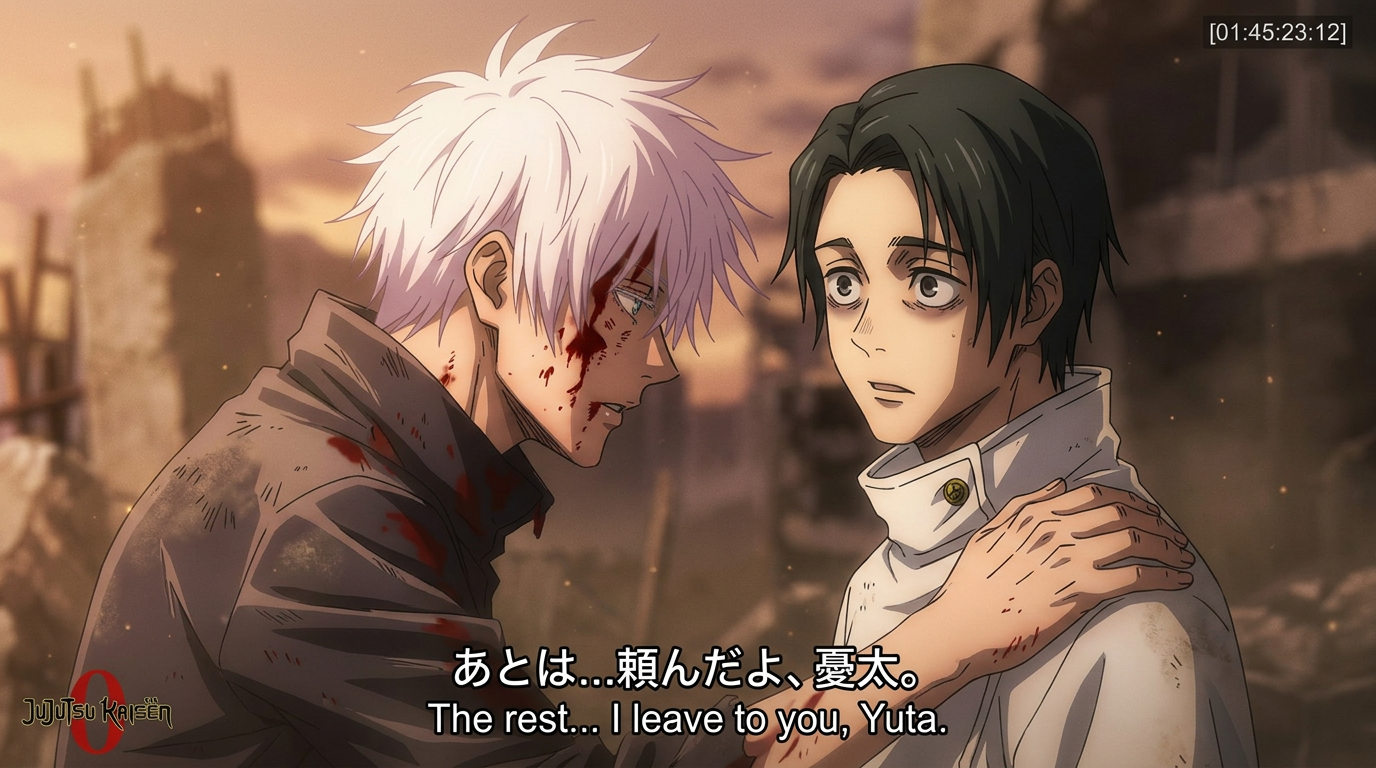
Which AI Model Can Recreate Anime Style Best?
Anime style is easy to imitate badly.
A lot of AI image models can create something that looks “anime-like” at first glance. But creating a frame that feels like it truly belongs inside Jujutsu Kaisen is a completely different challenge.
For this Optizeno test, we compared seven major AI image models using nearly the same prompt and reference setup. The goal was simple: which AI model can recreate the Jujutsu Kaisen anime screencap style most convincingly?
The test used Satoru Gojo and Yuta Okkotsu as the core character references, with the visual direction inspired by the cinematic anime language of Jujutsu Kaisen 0 and the broader Studio MAPPA production style.
The scene concept was emotional and difficult: a final teacher-and-student farewell, where a wounded Gojo reaches out to Yuta after battle. Yuta stands frozen in stunned silence, unable to fully react. The model had to preserve the character identities, follow the story, match the anime’s visual DNA, and create something that could almost be mistaken for a missing Jujutsu Kaisen episode or movie scene.
The seven models tested were:
- Nano Banana 2
- GPT Image 2
- Midjourney v7
- Flux.2 Pro
- Seedream 5 Lite
- Wan 2.7 Pro
- Kling 01
This was not a general “which image looks cool?” test. This was a strict Jujutsu Kaisen style fidelity test.
Test Methodology
For fairness, the prompt structure stayed almost the same across all models.
The prompt asked each model to create a cinematic anime screencap featuring Satoru Gojo and Yuta Okkotsu in a tragic post-battle farewell scene. Gojo needed to look exhausted and emotionally final, while Yuta needed to remain silent, shocked, and emotionally frozen.
The evaluation focused on five major areas:
- Gojo and Yuta identity lock
- Prompt obedience
- Jujutsu Kaisen screencap authenticity
- Emotional storytelling
- Style extraction from the reference image
1. Nano Banana 2 Review — 5/5
Rating: 5/5
Verdict: The clear winner of the test.
Nano Banana 2 delivered the most convincing result in the entire comparison. It understood the assignment at a level that felt more intelligent than mechanical.
The prompt asked for a scene that looked like an official Jujutsu Kaisen movie screencap, and Nano Banana 2 took that instruction seriously. It did not simply generate two anime characters standing in a dramatic pose. It created an image that felt like a paused frame from a real emotional sequence involving Satoru Gojo and Yuta Okkotsu.
The strongest part was the model’s ability to understand the “official anime movie screencap” concept. It added details that were not directly forced in the prompt, such as Japanese subtitles, English translation, a playback-style timestamp, and a Jujutsu Kaisen movie-like logo element. Normally, extra elements can ruin an image, but here they supported the illusion. It looked like the model understood the viewer psychology behind the request.
The character identity preservation was outstanding. Gojo’s white hair, facial structure, uniform language, and exhausted expression were handled with impressive control. Yuta’s face, white uniform, and stunned emotional stillness also stayed highly recognizable. The result did not feel like random anime fanart. It felt composed, dramatic, and intentionally cinematic.
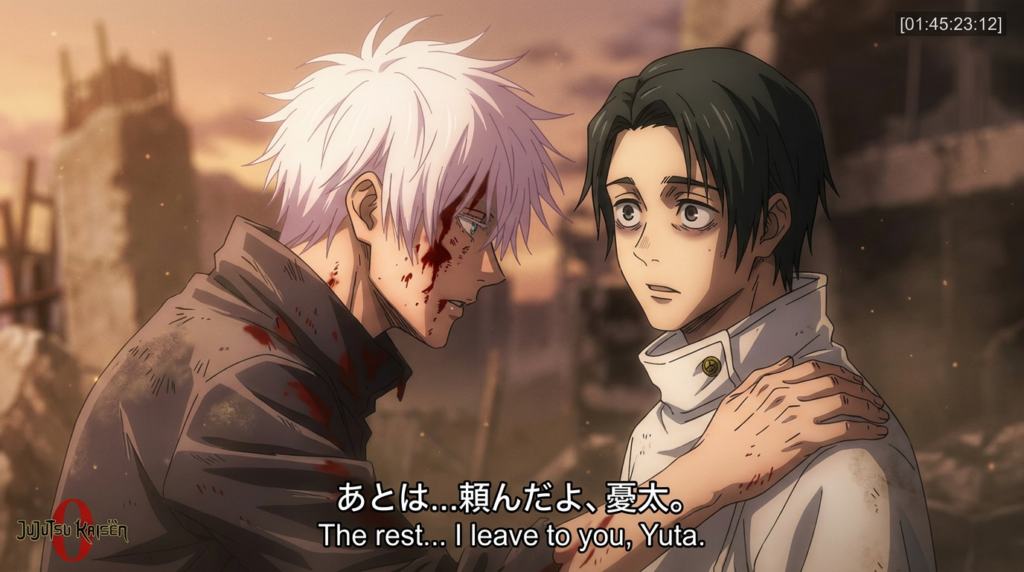
The emotional storytelling was also the strongest. Gojo’s final goodbye felt clear. Yuta’s stunned silence carried the sadness of the moment without becoming exaggerated. This restraint matters because Jujutsu Kaisen often relies on intense emotional moments that are not always overacted. Nano Banana 2 captured that restrained tragedy better than the rest.
The lighting, background, color grading, facial detail, subtitle treatment, and composition all worked together. It captured the intended Studio MAPPA / Jujutsu Kaisen production-frame illusion better than any other model tested.
This is why Optizeno gives Nano Banana 2 the full score.
2. GPT Image 2 Review — 4.8/5
Rating: 4.8/5
Verdict: Almost perfect, and the most emotionally accurate clean result.
GPT Image 2 came extremely close to winning this test.
The result was excellent. It followed the prompt with impressive precision and created a scene that looked emotionally believable, visually polished, and strongly connected to the Jujutsu Kaisen style reference. The character identity lock was one of the best in the test. Satoru Gojo and Yuta Okkotsu remained instantly recognizable, and the body language matched the intended emotional scene.
The best thing about GPT Image 2 was how intelligently it solved the story. It understood that the image was not supposed to be a random action shot. It was supposed to be a restrained, tragic farewell between Gojo and Yuta. The weakened Gojo expression, Yuta’s stunned silence, the close emotional blocking, and the cinematic lighting all worked together beautifully.
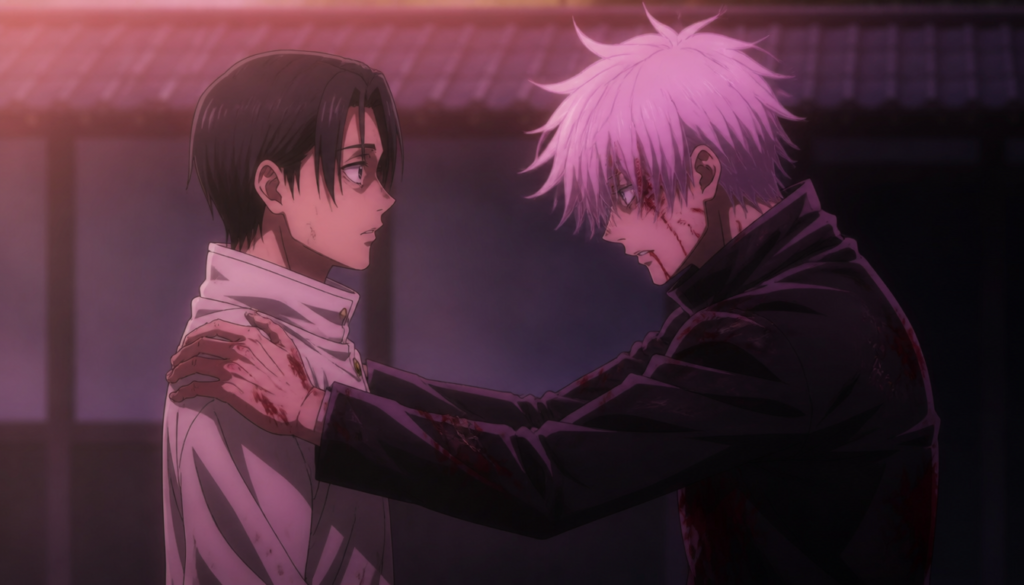
The composition felt controlled. Gojo and Yuta were placed naturally, with the emotional distance between them clearly visible. The scene had enough drama without becoming messy. The lighting had a soft but cinematic tone, and the overall image looked like it could belong in a high-budget anime sequence.
The main limitation came from content restriction friction. The prompt needed refinement because GPT Image 2 was sensitive around injury-related visual language. Even with that limitation, it still produced a result that captured the intended feeling extremely well. It did not break the characters, did not ruin the scene, and did not drift into a completely unrelated idea.
In many ways, GPT Image 2 created the cleanest and most emotionally faithful version of the concept. The only reason it did not beat Nano Banana 2 is that Nano Banana 2 went one step further with the full Jujutsu Kaisen movie screencap illusion.
3. Seedream 5 Lite Review — 3/5
Rating: 3/5
Verdict: Good identity preservation, but weak story execution.
Seedream 5 Lite performed better than expected in one specific area: identity lock.
The characters were still recognizable, and the model preserved enough Gojo and Yuta visual detail to stay above average. Compared with weaker models in the test, Seedream did not completely lose the core character shapes. That gives it some value for reference-based anime generation.
However, the main problem was story obedience.
The prompt asked for a tragic farewell moment with a very specific emotional balance. Gojo needed to appear weakened and emotionally final, while Yuta needed to stand frozen in stunned silence. Seedream did not fully deliver that story. The image looked more like a general anime character interaction than the specific dramatic Jujutsu Kaisen scene requested.
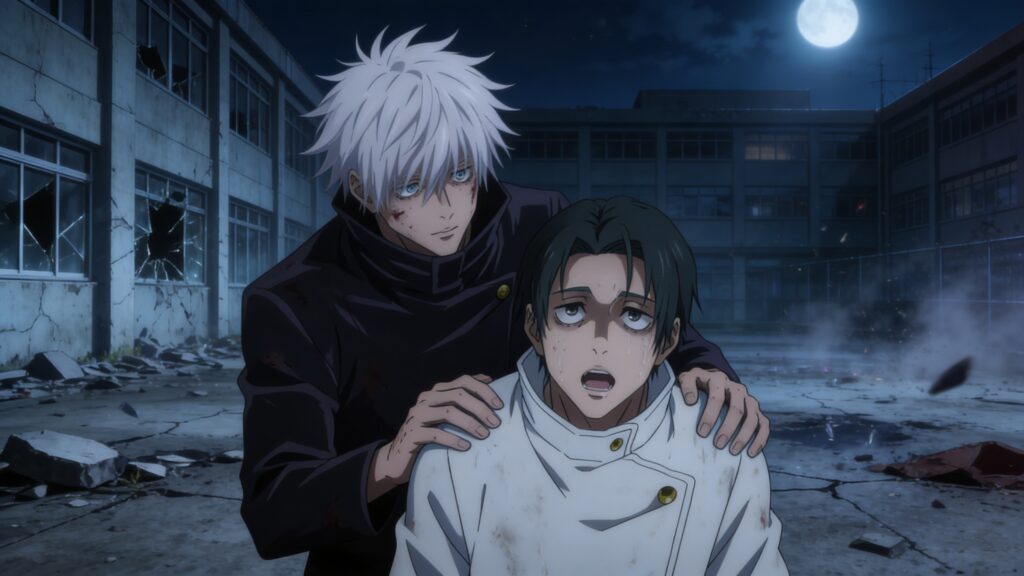
The environment also felt weaker than expected. It did not carry enough cinematic weight, battle aftermath, or emotional atmosphere. The scene lacked the intensity required for this test. It looked acceptable as an anime-style image, but it did not feel like a true missing frame from Jujutsu Kaisen 0 or the main Jujutsu Kaisen anime.
Seedream 5 Lite deserves credit for keeping the characters reasonably close, but this test required more than identity preservation. The model needed to understand staging, action, emotional restraint, and scene context. That is where it fell behind Nano Banana 2 and GPT Image 2.
4. Kling 01 Review — 3/5
Rating: 3/5
Verdict: Good identity lock, but poor emotional logic.
Kling 01 had a similar issue to Seedream. It did a decent job with identity preservation, but it did not understand the emotional direction of the prompt well enough.
The character visuals were not terrible. Some parts of the Gojo and Yuta identity lock were strong enough to keep the image from failing completely. But the scene itself did not follow the intended story.
The prompt asked for a quiet, tragic, emotionally restrained farewell between Satoru Gojo and Yuta Okkotsu. Instead, Kling produced a result that felt disconnected from that emotional target. Yuta’s expression did not match the gravity of the scene, and the character positioning made the moment feel less like a final goodbye and more like a different kind of interaction entirely.
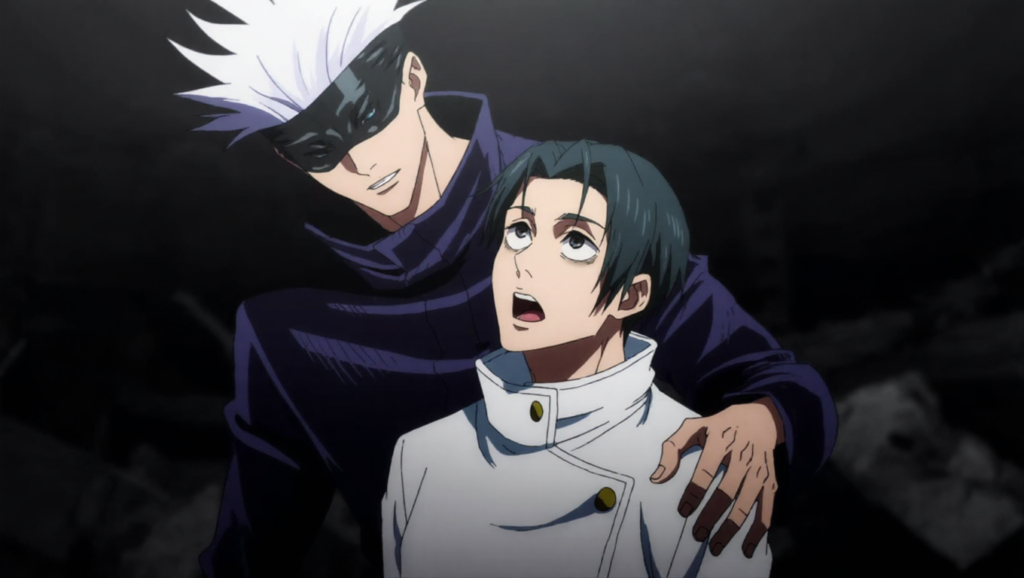
One of the biggest issues was body language. The prompt needed stunned silence, stillness, and emotional paralysis. Instead, Yuta looked upward with an expression that did not fit the intense sadness of the moment. Gojo also appeared too healthy and positioned in a way that ruined the farewell concept.
This matters because Jujutsu Kaisen-style generation is not only about drawing the right face. Scene logic is just as important. A model can create a visually attractive frame and still fail the task if the expressions, poses, and emotional tension do not match the requested story.
5. Wan 2.7 Pro Review — 2.5/5
Rating: 2.5/5
Verdict: Good lighting, but too much prompt compromise.
Wan 2.7 Pro produced a result that had some visual strengths, especially in lighting and anime atmosphere. The image had a polished cinematic feel, and the color grading was above average. In terms of general mood, it did better than some weaker models.
But the actual prompt obedience was disappointing.
The model appeared to soften or redirect the intended scene too much. Instead of a tragic final goodbye between Gojo and Yuta, the image felt like a completely different emotional moment. It looked more like Gojo praising or reassuring Yuta rather than a devastating farewell scene.
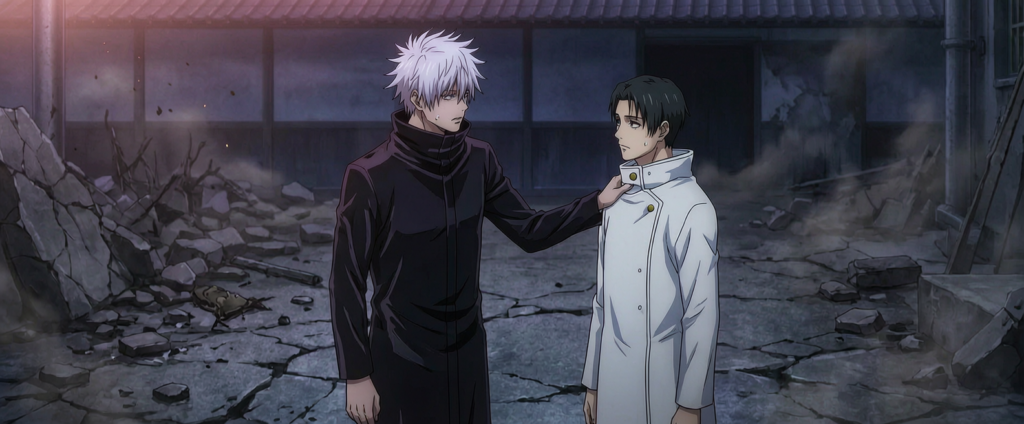
The character identity was also not strong enough. The outfit details were not fully accurate, and Yuta’s face only partially matched the intended reference. The long outfit shape and altered facial structure reduced the authenticity of the result.
The model did capture some cinematic lighting and a partial MAPPA-inspired Jujutsu Kaisen mood. That prevents it from receiving a lower score. But this test was not about making a nice anime image. It was about reproducing a specific Jujutsu Kaisen-style scene with character fidelity and emotional accuracy. On that standard, Wan 2.7 Pro fell short.
6. Flux.2 Pro Review — 2/5
Rating: 2/5
Verdict: Acceptable basics, but weak transformation intelligence.
Flux.2 Pro handled a few basic parts of the prompt correctly. The outfits were reasonably balanced, the height difference was present, and Yuta Okkotsu’s face was preserved better than expected. In terms of simple reference handling, it was not a total failure.
However, the deeper task exposed the model’s weakness.
The prompt did not ask for a simple copy of the reference. It asked the model to transform the reference into a new emotional situation: a dramatic battlefield farewell between Satoru Gojo and Yuta Okkotsu. Flux.2 Pro struggled with that transformation.
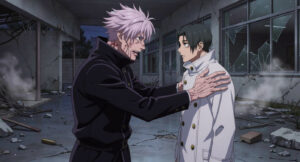
Gojo’s expression did not match the intended farewell mood. The model seemed to understand the surface-level idea of “battle damage” but failed to connect it with the correct facial expression, emotional tone, and character performance. The result looked more like a stiff interaction than a heartbreaking Jujutsu Kaisen-style anime scene.
There were also anatomical issues, especially around the hands. In a scene where hand placement and physical contact carry emotional weight, that matters a lot. If the hands look unnatural, the entire moment becomes less believable.
The environment was only barely acceptable. It had some damaged-location elements, but it did not feel fully integrated into the story. Overall, Flux.2 Pro seemed more comfortable when the requested output stayed close to the original reference type. Once the scene required a changed expression, altered emotional state, and new story context, it lost accuracy.
7. Midjourney v7 Review — 0/5
Rating: 0/5
Verdict: Failed the core task.
Midjourney v7 delivered the weakest result in this comparison.
This score may look harsh, but the rating is based on the specific task, not on Midjourney’s general artistic ability. Midjourney can create beautiful images, but in this particular test, it failed the essential requirements: Gojo identity lock, Yuta identity lock, Jujutsu Kaisen screencap fidelity, scene accuracy, and emotional story preservation.
The character identity lock was almost nonexistent. Yuta Okkotsu did not match the intended reference, and even Satoru Gojo, despite being the more visually famous character, was only loosely preserved. The height relationship, facial design, outfit accuracy, and overall character DNA drifted too far from the target.
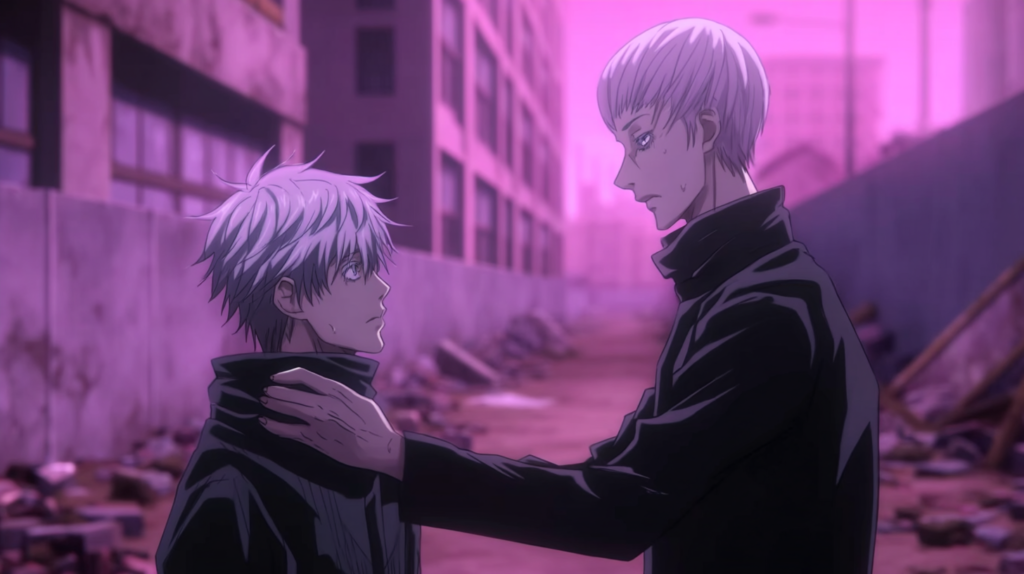
The environment also missed the target. The image looked more like a generic anime-styled scene than a carefully recreated Jujutsu Kaisen cinematic frame. The linework, framing, and atmosphere did not match the strict reference-based test.
This is why the score is 0/5. Not because the image has no visual value, but because it did not solve the assignment. When a test is specifically about recreating a recognizable Jujutsu Kaisen-style scene with strong reference fidelity, losing Gojo, losing Yuta, and losing the story means the result fails.
Best AI Model for Jujutsu Kaisen Style Recreation: Final Verdict
This test made one thing very clear: not every anime image generator understands anime scene DNA.
Some models can imitate the surface of anime. They can produce big eyes, cel-shading, dramatic lighting, and stylish clothing. But when the task requires Satoru Gojo identity preservation, Yuta Okkotsu identity preservation, cinematic framing, emotional acting, and Jujutsu Kaisen-style reference extraction, many models quickly fall apart.
The best models were the ones that understood the scene as a story, not just as a visual prompt.
Winner: Nano Banana 2
Nano Banana 2 is Optizeno’s winner for this Jujutsu Kaisen anime screencap recreation test.
It had the strongest mix of:
- Satoru Gojo identity lock
- Yuta Okkotsu identity lock
- cinematic Jujutsu Kaisen style
- emotional storytelling
- prompt interpretation
- screencap illusion
- creative production-frame details
GPT Image 2 came extremely close and may be the better option when users want a cleaner image without added subtitles or logo-like elements. But Nano Banana 2 created the most convincing “this could be from Jujutsu Kaisen” result overall.
Runner-Up: GPT Image 2
GPT Image 2 deserves serious respect. It followed the prompt beautifully and created one of the most emotionally accurate outputs in the test. It was nearly perfect. The only reason it lost to Nano Banana 2 was because Nano Banana 2 added an extra layer of cinematic authenticity.
Most Disappointing: Midjourney v7
Midjourney v7 failed this task because it did not preserve Gojo, Yuta, or the scene logic. For loose anime art, it may still have value. But for strict Jujutsu Kaisen screencap recreation, it was the weakest result here.
What This Test Reveals About AI Anime Generators
The biggest lesson is that anime generation and anime recreation are not the same thing.
A model can create a beautiful anime image and still fail at recreating a specific anime-style scene.
For casual anime art, many models are usable.
For strict Jujutsu Kaisen-style reference recreation, only a few are truly competitive.
Based on this test, the top two are:
- Nano Banana 2
- GPT Image 2
Everything else needs improvement for this specific use case.
Optizeno Recommendation
For creators, editors, and AI image testers who want the closest anime screencap-style result, Nano Banana 2/ GPT Image 2 is currently the strongest pick from this benchmark.
For strict character-reference anime recreation, Optizeno does not recommend Midjourney v7 based on this test. It may still be powerful for general art direction, but this benchmark exposed its weakness in identity-locked anime scene reconstruction.