AI ToolPaid
Codex 5.5 Review: The Future of AI-Powered Coding
Reviewed by M. A. Akash
4.7 / 5.0
Visit Codex 5.5 Review: The Future of AI-Powered Coding
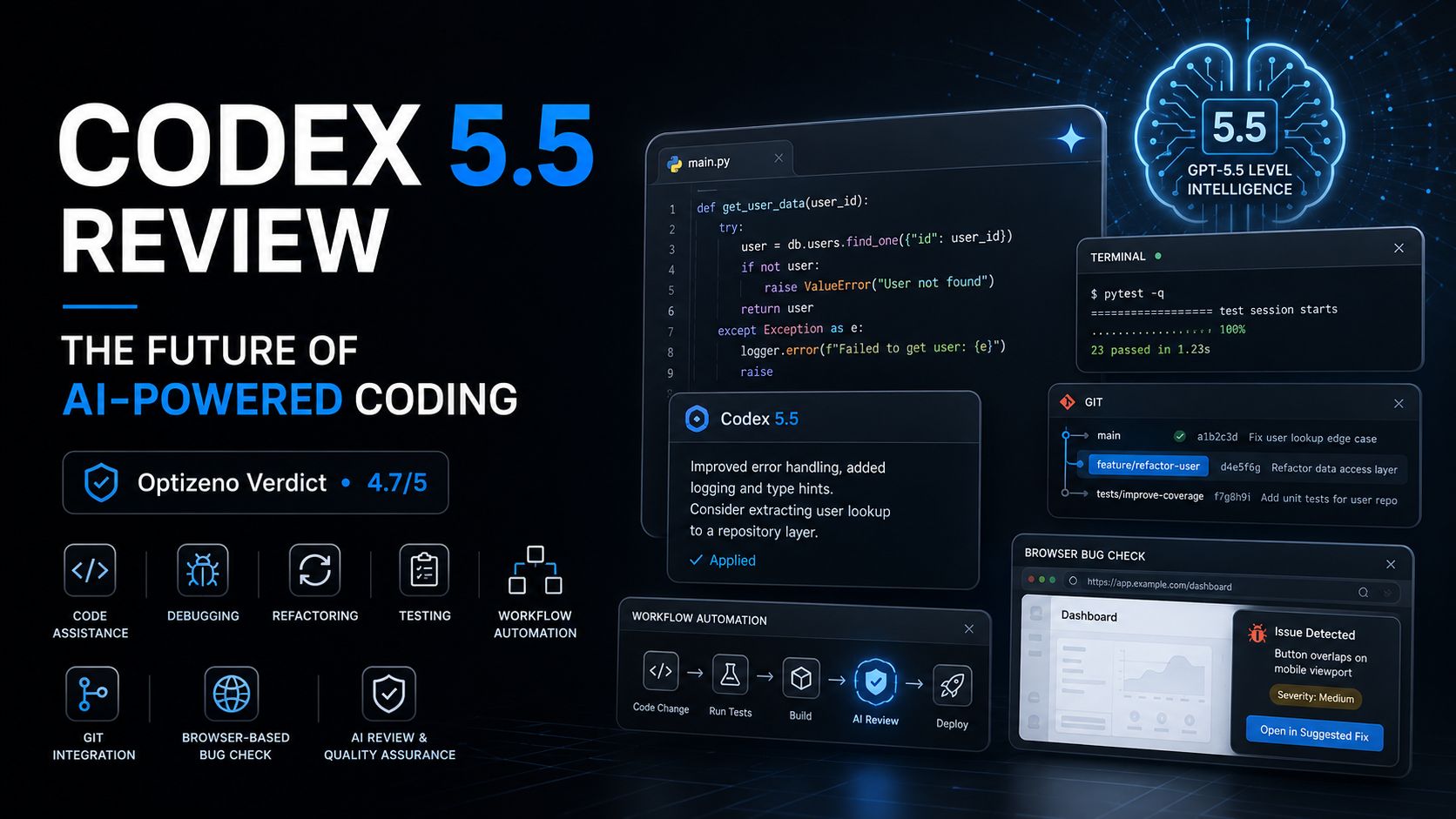
Having spent considerable time integrating and evaluating OpenAI’s Codex 5.5, I can confidently say this iteration marks a significant leap forward in AI-assisted development. This isn’t merely an incremental update; it’s a foundational shift, particularly with its tight integration of the new GPT-5.5 model.
The experience feels less like using a tool and more like collaborating with an exceptionally skilled, albeit digital, co-pilot. Codex 5.5 excels in handling complex coding tasks, from initial implementation and meticulous refactoring to rigorous debugging and comprehensive testing. It’s also remarkably adept at generating knowledge-work artifacts, streamlining documentation, and even assisting with architectural decisions.
What truly sets Codex 5.5 apart is its enhanced efficiency and intelligence. Powered by GPT-5.5, it demonstrates a superior understanding of intricate codebases and development workflows. I’ve observed it tackling multi-step development tasks that would typically consume hours, completing them with impressive accuracy and consistency.
This isn’t about simple code snippets; it’s about end-to-end problem-solving, including logic handling and intricate debugging. The desktop application itself provides a focused environment, offering worktree support, advanced automations, and seamless Git integration, which collectively elevate the developer experience.
Furthermore, the introduction of in-app browser capabilities allows Codex to interact with local development servers and file-backed pages, enabling it to reproduce visual bugs or verify fixes directly within the application. This feature alone drastically reduces context switching and accelerates the feedback loop during development.
The system’s ability to perform automatic approval reviews is another standout. When configured, it routes eligible prompts through an AI reviewer agent, providing a review status and risk level before execution. This adds an invaluable layer of quality assurance and helps catch potential issues early in the development cycle.
Optizeno Verdict
For anyone deeply involved in software development, from individual contributors to engineering managers, Codex 5.5 is designed to amplify productivity and elevate code quality. It’s particularly beneficial for those working on large, complex projects where maintaining consistency and catching subtle errors can be challenging. The focus on robust safeguards with GPT-5.5 also ensures a more secure and reliable development environment, addressing critical concerns around AI misuse while still providing powerful capabilities.
Pros
- Significantly improved capabilities for restructuring complex code with GPT-5.5.
- Proven ability to handle multi-step development tasks with high consistency.
- Dedicated desktop app with worktree support, automations, and Git integration.
- Allows Codex to interact with local development servers and UIs.
Cons
- Dependency on GPT-5.5 Availability
- Learning Curve for Advanced Features